

Hiking trails in Madeira – Everything you need to know
As densas florestas da Laurissilva, as deslumbrantes paisagens de montanha e as idílicas paisagens costeiras fazem da Madeira uma verdadeira satisfação para todos os amantes da natureza.
Não há melhor forma de descobrir os tesouros naturais da Madeira do que passeando pelos maravilhosos hiking trails of Madeira. Visiting Madeira without exploring its trails is almost like going to Rome without seeing the Pope. Madeira offers dozens of hiking trails and paradisiacal lagoons for all visitors. The wonderful trails connect the highest peaks in the island’s center with the volcanic peninsula of Ponta de São Lourenço.

More importantly, Madeira has trails and levadas for all tastes: some are very long, some are very short, some are easy, others very difficult… The choice isn’t easy, but you can be sure of one thing: on all of Madeira’s trails, you will experience unique nature, and inevitably see breathtaking landscapes and many natural wonders.
And in this article, you will discover what we consider to be the best routes and the most beautiful trails in Madeira. We also provide tips and routes for the corresponding hiking trails. All this so you can plan your stay in Madeira according to your interests and required difficulty, and everything you’ll need for your perfect hike!
What are hiking trails?
A trail is a path that usually passes through natural and rural areas and is marked with internationally recognized and accepted signs and codes. In Portugal, there are two types of national routes: the so-called Pequena Rota (PR), whose length does not exceed 30 kilometers or is less than a day’s walk, and is marked in yellow and red, and the Grandes Rotas (GR).

Hiking trails are different from other similar activities because hiking routes are pre-marked with internationally recognized codes and signs. Here’s how to identify them:
- Pequena Rota – abbreviated as PR, with a distance of less than 30 kilometers, and marked in yellow and red.
- Grande Rota – abbreviated as GR, are more than 30 kilometers long or require multiple days to complete, and are marked in white and red.
The list of long-distance hiking routes in Portugal is approved by the Portuguese Camping Association.
Code of Conduct
Before starting any activity, we need to plan for food, transportation to the location, accommodation (if necessary), equipment, and other factors to ensure we do it correctly and avoid any unexpected inconvenience.

First, choose the right clothing for the activity you plan to do. Shoes should be comfortable and especially suitable for hiking. Simply follow the marked trails. It is also important to follow these rules:
- Do not disturb the tranquility of the area;
- Observe wildlife from a distance; binoculars are recommended;
- Do not harm the flora;
- Do not leave litter;
- Close gates and barriers;
- Respect private property;
- Do not light fires;
- Do not collect plant or rock samples;
And for your safety:
- Do not go alone; always have company.
- Gather updated route information in advance.
- Always tell others the route you plan to take and your estimated time of arrival.
- Ensure you will finish before dark.
- Bring water, appropriate clothing, and suitable shoes.
- In case of heavy rain and strong winds, do not follow the trail or return by the same path.
- Do not take risks.

What equipment is necessary?
One of the most common sports activities in the world is walking. It’s everywhere: in cities, squares, or forests. In nature, this is called a trail. Walking is the most democratic adventure sport in the world. Except for some advanced routes, people of all ages can participate and be safe. There are simple routes suitable for beginners in Madeira, which we will see later, as well as more complex routes.
As with all sports, you need some kind of equipment. What is necessary? Trails can be done during the morning or in the afternoon, but in any case, some type of equipment is required.
It is important to invest in your own equipment, as it will ensure the safety and comfort of your trip. Find out what you need:
Comfortable footwear

Shoes are one of the most important items when walking, hiking, and warming up. This equipment is crucial. New boots or unsuitable shoes can cause blisters and/or bruises on your feet and prevent you from completing the hiking trail. Shoes should provide a certain amount of foot control and prevent slipping. If you have climbing shoes, even better. Use shoes with small buckles to increase safety.
Finally, shoes should hold your feet firmly on uneven terrain to prevent them from twisting.
Appropriate clothing
When choosing clothes, opt for synthetic fiber fabrics. Natural fabrics like cotton can absorb sweat and keep the body warm. They can protect your feet from scratches and cuts from branches and vegetation along the way.
Another important dressing technique is to check the weather forecast before you leave. Knowing what to expect will help you prepare. If the weather is cold, layer up with warm clothes. If it rains, bring a raincoat and a backpack cover.
Water bottles
You need to stay hydrated during any physical activity. The body loses water through sweat, breathing, and urine. Even on cold days, you will sweat during exercise.

A water bottle to replenish lost fluid is essential. Without this replenishment, the body will become dehydrated, which is very dangerous. To avoid this inconvenience, buy a large water bottle or a backpack with a liquid storage reservoir.
If you can find a water source anytime and anywhere, use a tablet or filter to remove contaminants and bacteria before drinking.
Tent
Anyone wishing to spend the night will need a tent for sleeping. Choose a lightweight tent that weighs no more than 3 kg and, if possible, is retractable, which is very useful for camping on rainy days. Cost-effectiveness also plays a role here. The tent is the most expensive piece of equipment mentioned here. Look for quality products that are sealed, waterproof, of ideal size and weight, and potentially valuable to you.
Sleeping bag
For those spending the night in nature or undertaking a multi-day route, sleeping bags are another essential item. This will be your bed and protection at night; pay attention to its size and volume. The important thing is that it doesn’t take up too much space in your backpack. Note that there are different types for different temperatures.
If you’re traveling to a very cold place, you’ll need a sleeping bag that promotes warmth. As the name suggests, this function insulates from the ground temperature and is used underneath the sleeping bag to prevent the cold from spreading.
What to eat during the route?
What to eat during the trail? This is one of the most frequently asked questions by many who enjoy being in contact with nature and plan to go hiking. Therefore, we will provide some tips to help you choose your food, taking into account general factors for an excellent route.
Weight and volume in the backpack
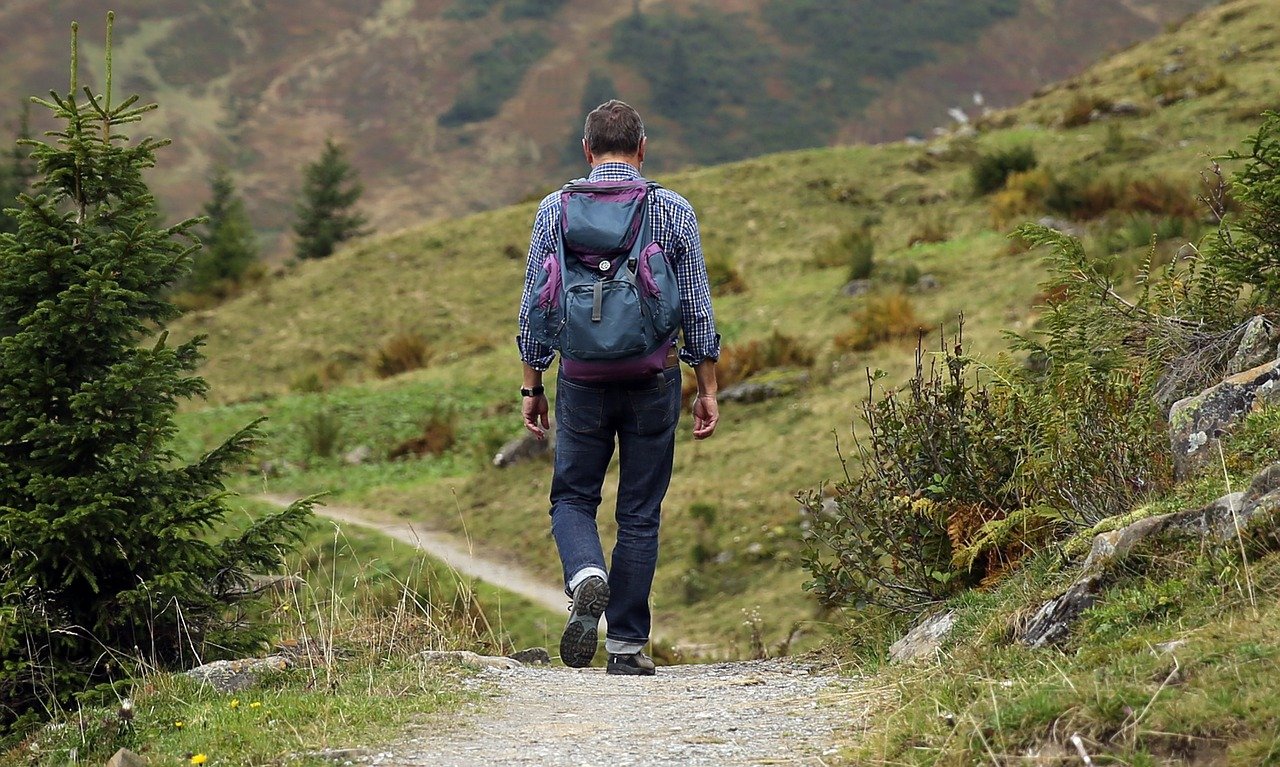
We need to wisely choose foods so they don’t add too much weight to our backpacks. Therefore, avoid carrying canned foods and glass containers, as they add significant weight.
Coffee, powdered milk, chocolate, instant soup, etc. These may not be the healthiest foods in the world, but they take up little space and provide an energy boost during the trails.
If you like fruit, generally prefer dried fruits like apricots and raisins. This is because, most of the time, there are no trash bins on the trail. Packaging / pits should be carried with you throughout the entire trip. Besides volume, there’s also weight. For example, raisins are easier to eat than bananas because they don’t generate waste.
Raisins, therefore, are better options. The biggest advantage is that they don’t need to be refrigerated and don’t come in packaging.
Best food options
Remove cereals, such as oats and oatmeal, from their original packaging and place them in ziplock bags as needed. Do the same with canned foods (such as sweetcorn or vegetables). Only take what you intend to eat. For long-distance trails, put salt and pepper on your food or in separate bags.
Dried mushrooms are a good source of protein. Besides being healthy and delicious, these mushrooms take up very little space. Favor options like peanuts, walnuts, almonds, and chestnuts… Nuts provide quality calories and last longer. Try mixing nuts and seeds with dried fruit, such as raisins.
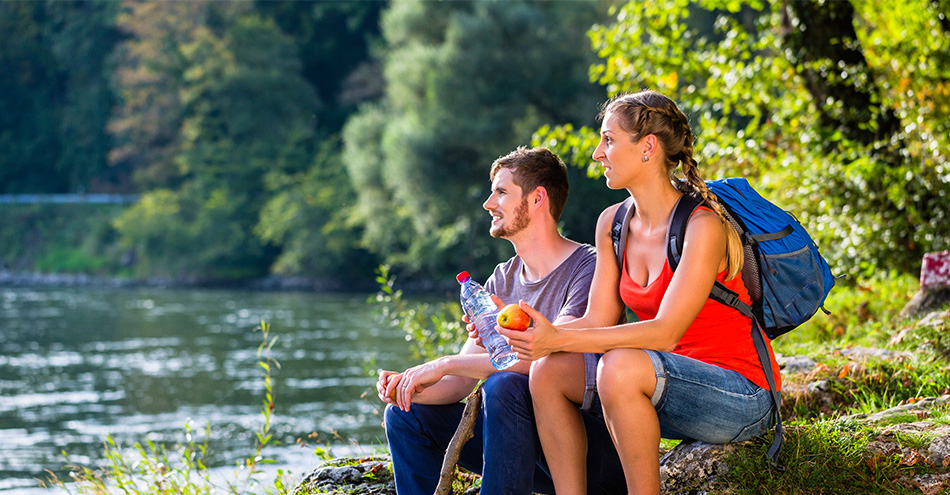
Next, bring chocolate. Yes, the trail is also the place for chocolate. Besides providing calories and plenty of energy during the trail, it takes up little space and is a delight. Those who like it can opt for chocolate with nuts. For example, compared to milk chocolate, they have a higher caloric content and a lower glycemic index (blood sugar levels rise faster). Just don’t overdo it, okay?!
Last but also very important: Whole wheat bread, pasta, and crackers: in addition to carbohydrates, these whole wheat products contain more fiber than common foods. Dietary fiber prevents the rapid absorption of carbohydrates and makes glucose levels more stable, which will give you more energy during the journey.
Unless you are traveling to a very cold place, avoid foods that require refrigeration. Cream cheese is delicious, but unfortunately, it’s not the best option for hiking.
The best hiking trails on Madeira Island
Below is a list of the best trails and levadas in Madeira, so you can choose the option that most appeals to you and meets your preferences.
Levada das 25 Fontes and Levadas do Risco (PR6 and PR6.1)
Madeira offers exciting trail proposals for hiking along two of its most beautiful levadas, namely Levada das 25 Fontes and Levada do Risco (PR6 and PR6.1).
The total length of the two routes is about 11 kilometers (circular route), and the starting point is Miradouro do Rabaçal in the center of the Paul da Serra Plateau. From Casa de Abrigo do Rabaçal, they run parallel to the subtropical Laurisilva Forest, which has been a UNESCO World Heritage Site since 1999. In addition to the idyllic beauty of the trails filled with lush vegetation, at the end of Levada do Risco, you will also find an impressive waterfall, which is truly impressive and lives up to its name.
At the end of Levada das 25 Fontes, you will find a natural amphitheater of rare beauty with 25 streams of water that form the Lagoa das 25 Fontes. You can hardly imagine a more idyllic setting to begin your hike.
Trilho do Alecrim and Trilho da Lagoa Do Vento (PR 6.2)
Another of the most popular trails is Levada do Alecrim, which is combined with Trilho da Lagoa Do Vento (PR 6.2). The route begins at Miradouro do Rabaçal and the Levadas das 25 Fontes. This path is well-marked and is about 9 kilometers long, with a detour to Lagoa do Vento (2 km round trip).
If you only want to go to Levada do Alecrim, walk a few meters on the asphalt road and turn right later to reach the wonderful heather tunnel that accompanies the levada. At the end of the trail, you can enjoy the view of Lagoa da Dona Beja.
Next, you will see a sign with instructions to reach Lagoa do Venta, the true paradise of Madeira. Each side is only 1 km, but the ledges are very steep (you have to pass about 700 meters of ledges on each side).
Vereda do Areeiro Trail (PR1) + Pico Ruivo (PR1.2)

In the opinion of many, the Vereda do Areeiro **is the best trail in Madeira**. It’s impossible not to include this route on the list of the best hiking trails and levadas in Madeira. This trail connects Pico do Areeiro (1817 meters) to Madeira’s highest peak, Pico Ruivo (1861 meters), with the magical seven kilometers winding through the heart of Madeira. This route is beautiful and challenging.
You’ll have to ascend steep slopes, pass through tunnels and narrow passages carved into the rocks, and contend with unstable weather. A true challenge that attracts many outdoor enthusiasts eager to connect with nature.
Caldeirão Verde Trail (PR9)
The list of trails and levadas for Madeira must include the Levada do Caldeirão Verde. This trail consistently follows a levada, from Queimadas Forest Park to Caldeirão Verde. Approximately 6.5 kilometers long (13 kilometers round trip), this is a place of exceptional beauty where you can see majestic waterfalls and idyllic lagoons. Along the way, you’ll pass through four tunnels.
You’ll also be able to enjoy the verdant landscape of the Laurisilva Forest. It is indeed one of Madeira’s most idyllic levadas. If you wish to extend your hiking time, you can go to Caldeirão do Inferno. That’s an additional 2.5 kilometers (5 kilometers round trip), but be prepared for a challenging hike, as there are over 300 steps to ascend and descend.
Ponta de São Lourenço Trail (PR8)
Another trail we are proud of is the fabulous Ponta de São Lourenço. At Ponta de São Lourenço, Madeira’s iconic lush vegetation gives way to a lunar landscape characterized by steep, undulating brown, orange, and red cliffs, where only shrubs and a small palm tree oasis can be found.
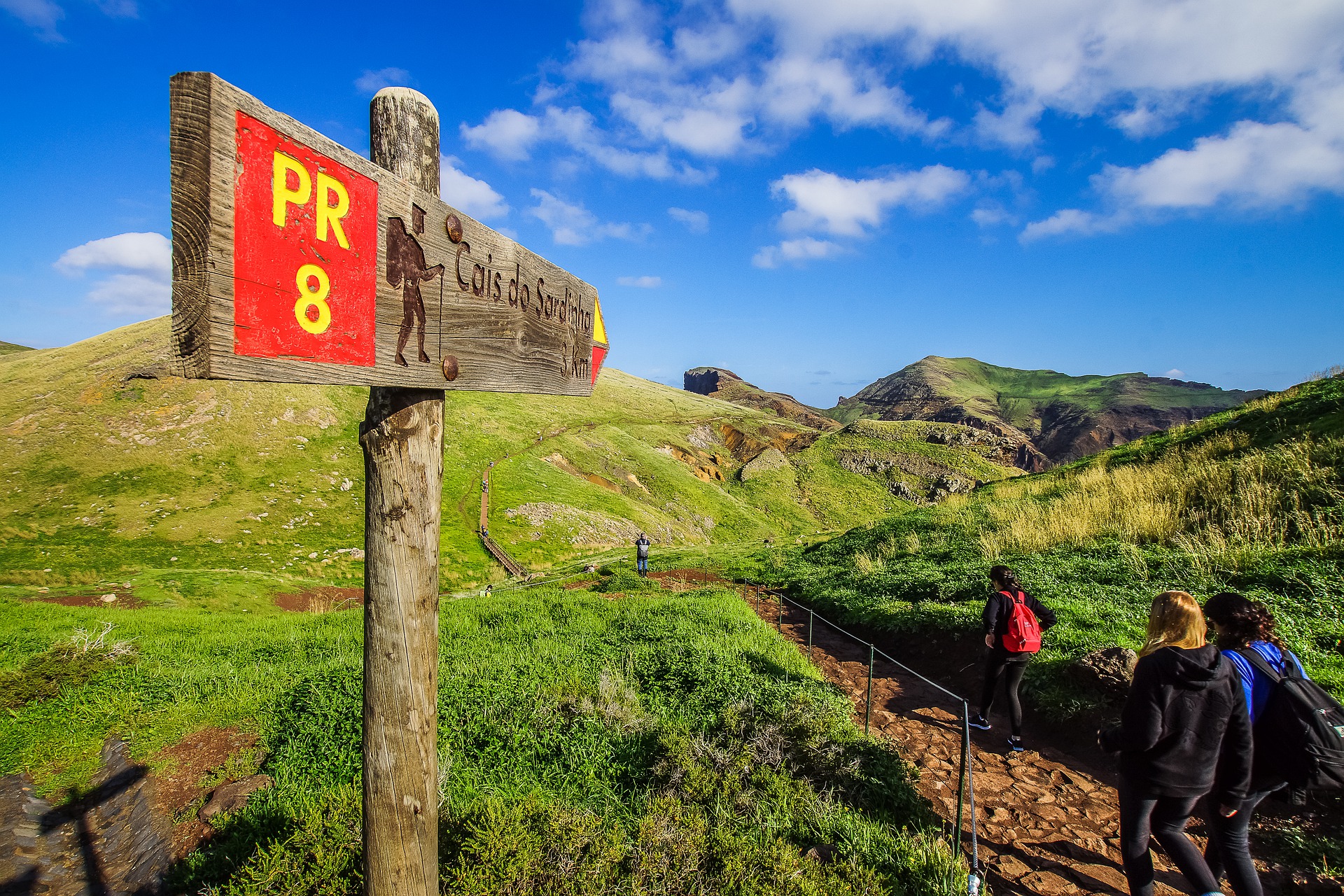
This is due to the semi-arid climate and strong exposure to northern winds. Along the peninsula, two small islets can still be seen: Ilhéu da Cevada and Ilhéu do Farol, which, as the name suggests, is home to the lighthouse.
The feeling of traveling to another island is inevitable! The trail is approximately 4 kilometers long (8 kilometers round trip), alternating between ascents and descents along the cliffs of Ponta de São Lourenço.
You will see countless otherworldly rock formations and admire the marvelous coastal landscape of Porto Santo, which appears on the horizon almost at the end of the route, just before the majestic Ponta do Furado.
You will also find Cais do Sardinha in an idyllic bay, where the clear waters invite you to relax, and Casa do Sardinha where you can rest and enjoy a drink before returning.
Vereda da Encumeada Trail (PR1.3 + PR1.2)
The Vereda da Encumeada is another one of our recommended trails in Madeira. Theoretically, this route is 11 kilometers long and starts at Casa de Abrigo do Pico Ruivo. Since the only way to access the house is on foot, the route practically begins at Achada do Teixeira, meaning you’ll have to cover an additional 2 kilometers.
The physical difficulty of this trail is very high, with altitudes ranging between 1,000 and 1,800 meters, accompanied by constant climate changes. With frequent wind and fog. Besides these challenging conditions, this is a true carousel of ups and downs. It’s worth noting that it is both challenging and extraordinary!
This route traverses Madeira’s central mountain range towards Encumeada and not only offers visitors magnificent views of Madeira’s highest peaks and volcanic cliffs but also passes through the Laurisilva forest. It passes through one of the most beautiful scenic areas in the central part of the island, such as Curral das Freiras. Therefore, this is one of Madeira’s most comprehensive trails, and we are sure you’ll easily see why we’ve included it in our list of the best hiking trails in Madeira.
Are you already familiar with the AllTrails app? It allows you to access all trails on Madeira Island, track your entire route via the dynamic / 3D map, and get useful information and opinions from other users about the trail.
Tips for Hiking Trails in Madeira
The weather in Madeira is very unstable! Therefore, always keep this in mind when choosing and preparing for Madeira’s trails and levada walks. Ideally, it’s best to first check real-time conditions on the Net Madeira website, especially if you plan to hike in high-altitude areas, such as Pico do Areeiro.
If you find that the weather conditions are very unfavorable, feel free to change your plan. Please note that weather conditions in Madeira not only change drastically but also change rapidly.

Sometimes, a trail might start under a clear blue sky, and a thick layer of fog will appear after a few hours, reducing visibility to less than thirty centimeters. Unless you have extensive experience hiking in high mountains, avoid Madeira’s high-altitude trails in bad weather conditions.
Avoid hiking on rainy days. The paths are often narrow and slippery, and there’s a risk of landslides and mudslides during heavy rain. Some Madeira trails pass through tunnels. Therefore, it’s best to carry a small flashlight or headlamp with you.
Cell phones with flashlights can also work, but note that the battery consumes a lot of power.
The Madeira Mountains and the Ponta de São Lourenço trail receive a lot of sun. When hiking these trails, bring sunscreen, sunglasses, a hat, and plenty of water.
Always inform someone about the route and trails you plan to take.
Safety Tips
To ensure an optimal experience (just as you wish), you cannot relax when it comes to safety! Regarding equipment, whenever you go hiking on Madeira’s trails and levadas, we recommend bringing a light, comfortable, waterproof backpack with all the necessary gear mentioned previously. Remember that the climate in Madeira is very diverse, so it can always rain.
When we talk about the island of Madeira, we imagine taking a dip in the beautiful beaches and natural pools of Madeira, but believe us, walking the trails in beach sandals is a bad idea.
Most of Madeira’s trails do not have support services. Therefore, it’s important to carry supplies and water with you during your hike. Don’t forget to bring your rubbish bags, including organic waste bags. Many tourists have forgotten this small detail, and nature will thank you for your gesture
Promoções de Viagens para a Madeira


